



The recruitment videos that work show real people doing real work, in a short format built to answer one candidate question each. Start with employee stories, a day-in-the-life film and a hiring-process overview. Then add leadership, team and role videos as your hiring needs grow. A production team can plan, film and edit these as one connected library, so every clip looks like it comes from the same employer.
This guide is for marketing teams, HR leaders and event and corporate communications managers who need to brief or commission hiring video. It covers the ideas, what each should show, how to produce them, where to publish them and how to tell whether they are working.
TL;DR
- Build a small library of short videos, each answering one candidate question: who will I work with, what is the day like, what happens after I apply.
- Employee stories, day-in-the-life films and hiring-process overviews are the strongest starting set.
- Keep most clips under a minute and let real employees speak in their own words. Authenticity matters more than spectacle.
- Plan a shoot day to capture several videos at once, then cut them for your careers page, LinkedIn, YouTube and job posts.
- Track application rate, completion rate and retention, not only views.
Table of Contents
- What a recruitment video does for hiring and employer branding
- 10 recruitment video ideas and when to use each
- What candidates want to see
- How to produce a recruitment video that feels real
- Where to publish recruitment videos
- How to measure whether it works
- Examples worth studying
- Work with a team that plans the whole library
- Our perspective: recruitment video is a strategy, not a single film
- FAQ
- Sources
What a recruitment video does for hiring and employer branding
A recruitment video is a short film that shows a company’s values, people and benefits so that qualified candidates apply. Built In describes it as both informational and marketing content, aimed at job seekers whose skills and traits fit the company culture. An employer branding video is the broader version: it shapes how the market sees you as a place to work, and recruitment videos are the individual pieces that do the daily work inside it.
The case for video is mostly about attention and self-selection. Recruiter Today reports, citing third-party research, that users are 80% more likely to convert on a page with video, and that video earns far more shares than text and images combined. Recruitics notes that video helps candidates decide for themselves whether they fit, which improves applicant quality, and that setting expectations before hiring supports retention.
The second benefit matters as much as the first. A good video does not only bring in more applicants. It brings in better matched ones, because people see the work, the managers and the pace before they apply.
10 recruitment video ideas and when to use each
Each idea below answers a different candidate question. Pick the ones that match your hardest roles to fill, then build outward.
1. Employee story videos
One employee, one honest story: why they joined, what surprised them, what they have learned. Keep it to around a minute and let the person speak in their own words. This is the most flexible format because it works on a careers page, in a job post and as a social clip. Rally Recruitment Marketing’s case study describes how SiteOne used employee video testimonials to engage even passive candidates and won second place for Best Use of Employee-Generated Content in the 2024 Rally Awards.
2. Day-in-the-life videos
Follow one person from arrival to end of shift. This answers the question candidates care about most: what will my Monday actually look like? It is especially useful for field, clinical, warehouse and other frontline roles, where candidates have the hardest time picturing the job. Show real tasks, real tools and real colleagues, not a staged walkthrough.
3. Meet the team videos
Short introductions of the people a candidate would work with, a few seconds to half a minute each. The goal is to show how the team actually talks, jokes and disagrees. These cut well into a single team page film and into many small social clips.
4. Hiring manager introductions
The manager says what the role needs, what success looks like in the first 90 days and what kind of person thrives on the team. For senior or specialized roles, this is often more persuasive than a job description because it gives candidates a person to respond to. Our guide to filming executive interviews covers lighting, framing and question prep that also apply to manager videos.
5. Job role explainers
A focused video on one position: the responsibilities, the tools, the career path and the skills that matter. Role explainers are the most direct way to filter for fit, since candidates who do not recognize themselves in the video can opt out before applying.
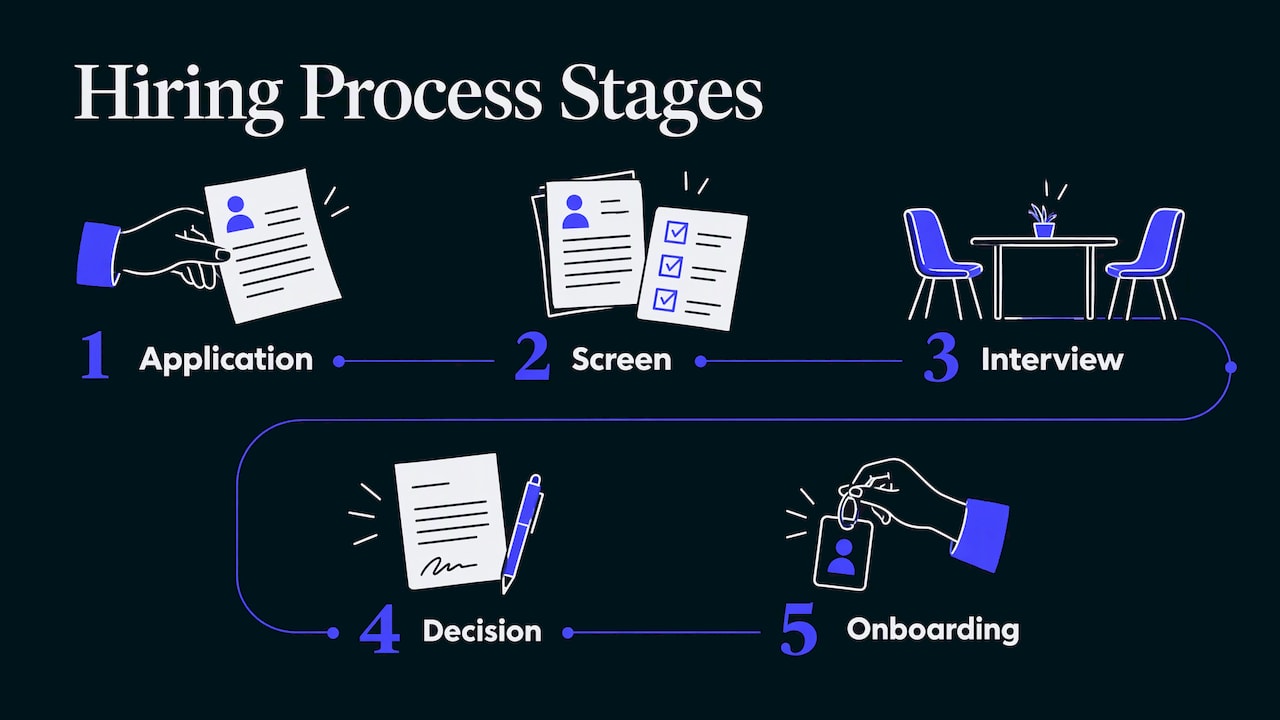
6. Hiring process overview
Walk candidates through every stage: application, screen, interview, decision, onboarding. Say how long each stage usually takes and who they will meet. Uncertainty makes candidates drop out, and a clear process video removes much of it. It is also a simple video to refresh when your process changes.
7. Leadership and values videos
A founder or executive explains the mission and the standards the company holds itself to. Keep it specific. A list of values read aloud persuades no one, but a story about a decision the company made because of a value does.
8. Workplace and office tour
A steady, well-lit walk through the space where people work, narrated by someone who works there. For event and corporate teams with multiple sites or a mix of remote and in-person staff, show how the arrangement actually works.
9. Benefits, growth and inclusion features
Show benefits in use: an employee describing how the training budget changed their career, a parent explaining how scheduling works, a team celebrating a promotion. Real examples carry more weight than a slide of perks.
10. Events and behind-the-scenes footage
If your company hosts conferences, trade shows, offsites or employee events, the coverage is hiring material. Candidates see what the culture looks like when people are together. Planning this at the same time as your event videography means one crew captures both the event deliverables and the recruitment cutdowns.
For more formats you can adapt to hiring, see our overview of corporate video types and the best corporate video formats.
What candidates want to see
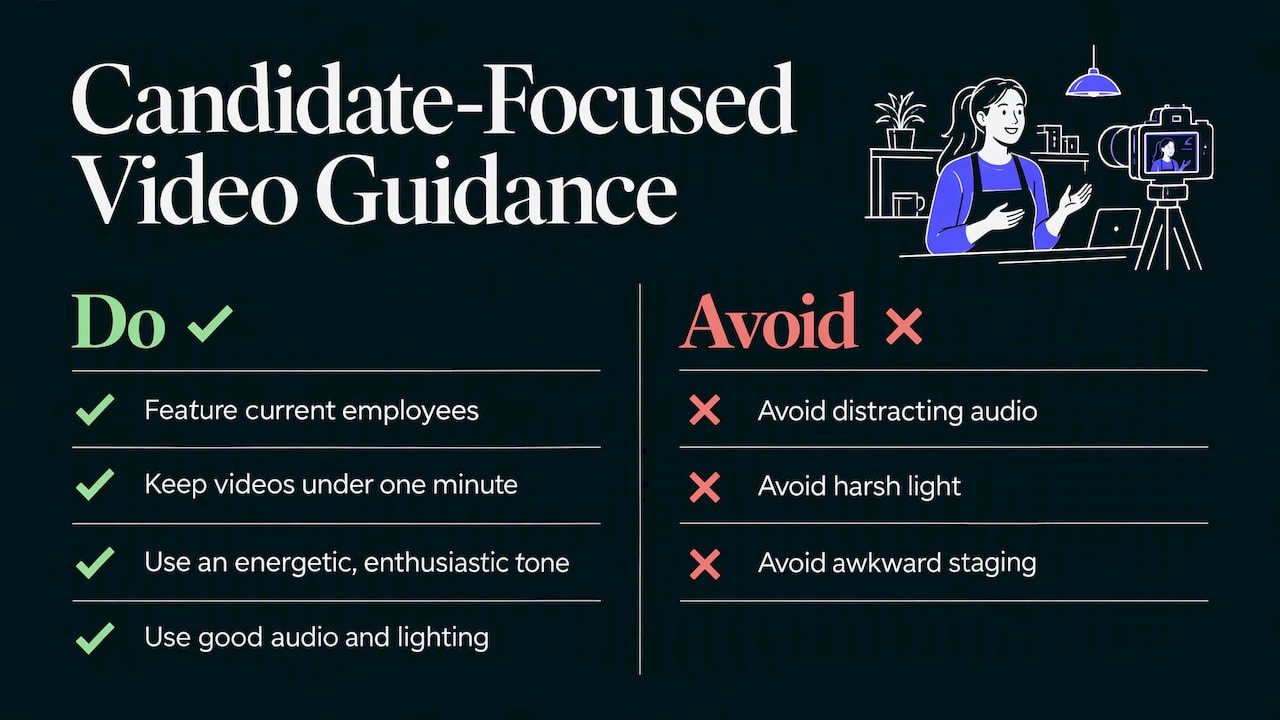
Candidates are not looking for a polished brand film. According to Forbes Human Resources Council contributors, candidates respond to real signal: the desk, the manager, the Monday. The same article reports that videos under one minute featuring authentic current employees are the most impactful, and sums it up as authenticity beating polish.
Indeed’s employer guidance adds practical direction: keep the tone energetic and enthusiastic, and choose from staff interviews across levels and departments, narration over office footage, or a single on-camera presenter. Suggested topics include company values, size, career opportunities, benefits and work culture.
This does not mean low production quality is the goal. It means the production should serve the people on screen. Good audio, clean lighting and thoughtful framing make real employees look and sound credible. Distracting audio, harsh light or awkward staging pulls attention away from what they say.
How to produce a recruitment video that feels real
The steps below apply whether you make one video or a full library.
1. Start with the candidate you need
Name the role, the audience and the one question the video must answer. A video for warehouse supervisors needs different proof than one for software engineers. Write down the action you want: apply, visit the careers page, attend a hiring event.
2. Choose real people, not actors
Pick employees who are willing, articulate and representative of the roles you hire for. Include people from different levels and departments. Brief them on topics, not scripts. Built In advises letting employees choose what to talk about rather than scripting them, because unscripted moments feel more genuine.
3. Plan for several videos per shoot day
Most of the cost in video is in getting a crew, lighting and people to one place. A single planned day can capture interviews, workplace footage and team moments, which are then edited into a main film, short social cuts and role-specific clips. A production partner with a nationwide network of professionals can staff shoots in more than one city, which helps when your hiring is spread across locations. At V2 Visuals, our recruitment video production work is built around this kind of planning.
4. Keep the structure simple
A reliable shape for a short clip: a hook in the first few seconds, context on who is speaking and what the role is, a real moment of work or emotion, and a clear call to action. Put that call to action on screen and in the caption, so candidates know what to do next.
5. Protect audio and accessibility
Clear sound matters more than flashy editing. Add subtitles, since many viewers watch with the sound off, especially on mobile and social feeds.
6. Handle confidentiality before the shoot
Recruitics advises coaching employees to avoid confidential or copyrighted material. Check screens, whiteboards, customer names, product prototypes and background music before you film, and get written consent from everyone who appears.
7. Edit for each channel
Cut a longer master film, then versions for each platform. A careers page can hold a longer story. Social feeds need vertical, captioned clips. Our social media video production work covers this multi-platform editing, and our LinkedIn video ads guide explains specs for paid distribution on the platform where many professional candidates are active.
Where to publish recruitment videos
Publish on every channel candidates use. Recruiter Today recommends placing recruitment videos across your website, LinkedIn, YouTube, Facebook, Instagram and job-posting links, and notes that many job seekers start on Google, so video on owned pages can also help search visibility. Recruitics lists career sites, social channels and Glassdoor among the places to share, with paid options such as YouTube, LinkedIn and the Google Display Network.
A simple placement map:
- Careers page: the main employer film, team videos and role explainers, near the apply button.
- Job posts: a role-specific clip or the hiring manager introduction.
- LinkedIn and Instagram: employee story and day-in-the-life cutdowns.
- Recruiter outreach and emails: a short link to the hiring process overview.
- Events and career fairs: the main film on screen at your booth.
How to measure whether it works
Views alone tell you little. Link each video to a decision.
- Application rate: compare applications from pages with and without video, using tracked links.
- Completion rate: how many viewers watch to the end of a short clip.
- Time on careers page: whether visitors who see video stay longer.
- Quality of applicants: screen-to-interview and interview-to-offer conversion.
- Retention: whether hires who saw the video stay past the first 90 days.
- Time to fill and cost per hire: the business outcomes the video should improve over time.
Published research gives a sense of what to expect. Board.org reports that a CareerBuilder survey found job postings with videos drew 34% more applications. Treat that as context, and judge your own results against your own baseline over a full hiring cycle.
Examples worth studying
When you review other employers’ videos, look at structure instead of copying the look. The SiteOne case above shows how real employees speaking on camera can reach passive candidates. Board.org’s roundup points to T. Rowe Price’s employee story about returning to work and Kohl’s distribution-team testimonial as examples of specific people telling specific stories. In both, the viewer learns something concrete about the employer. That is the model: one real person, one clear message.
Work with a team that plans the whole library
If you are hiring across roles, locations or events, one planned production beats several one-off videos. V2 Visuals produces corporate, marketing and branding videos, event videography and corporate photography for businesses and event teams, and ties creative work to business outcomes. Our recruitment video production page explains how we approach hiring video, and you can contact our team through the main site to discuss your roles, your locations and your timeline.

Bring your hiring plan, your target roles and any upcoming events. We can help you decide which videos to film first and how to capture them in the fewest shoot days.
Our perspective: recruitment video is a strategy, not a single film
Most companies ask for one recruitment video. What they need is a small system: a main film that explains who you are, and a set of shorter pieces that answer the questions candidates ask at each stage.
We approach this the way we approach any project: start with the goal and the audience, then work out what to film. A deep understanding of what you want the video to achieve shapes everything, from who we interview to how we cut the final clips.
That is why we like to combine shoots. When we are already on site for an event, a corporate shoot or a photography day, capturing recruitment footage adds little extra effort and gives your team a library of authentic material. Our nationwide network of professionals makes that possible in more than one city.
Hiring video earns its place when it leads to measurable results: more of the right applicants, fewer dropouts and a clearer employer brand.
Brandon V
FAQ
How long should a recruitment video be?
Most short recruitment clips work best under a minute, according to both Forbes contributors and Recruitics. A main employer film on your careers page can run longer if every minute earns its place. Plan one longer master and several short cuts.
What should a recruitment video include?
Include real employees, the work itself, your values shown through examples and a clear next step. Indeed suggests covering company values, size, career opportunities, benefits and culture. Add the hiring process if candidates often ask about it.
What is the difference between a recruitment video and an employer branding video?
An employer branding video shapes how people perceive you as an employer in general. A recruitment video targets a specific hiring need, such as a role, a team or an event. Most companies need both, produced together so they share the same look, voice and message.
Do I need actors or a script?
No. Real employees are more credible than actors, and unscripted answers tend to feel more genuine. What helps is a plan: topics to cover, a prepared set of interview questions and a crew that makes people comfortable on camera.
Where should I post my recruitment videos?
Post them on your careers page, LinkedIn, YouTube and Instagram, and include them in job posts and recruiter outreach. Use paid distribution when you have urgent or hard-to-fill roles. Cut each video to fit the platform’s format.
Sources
- Built In: 26 Recruitment Videos That Attract Qualified Candidates
- Built In: Company Culture Videos
- Recruiter Today: Recruitment Videos, An Often Overlooked Employer Branding Tool
- Recruitics: Recruitment Videos, Everything You Need to Know
- Forbes Human Resources Council: 12 Ways To Use Short-Form Video To Strengthen Recruitment Marketing
- Indeed: 9 Ways to Feature Your Recruitment Video
- Rally Recruitment Marketing: SiteOne’s Use of Employee Video Content
- Board.org: Impactful Employee Storytelling, 5 Recruitment Marketing Videos